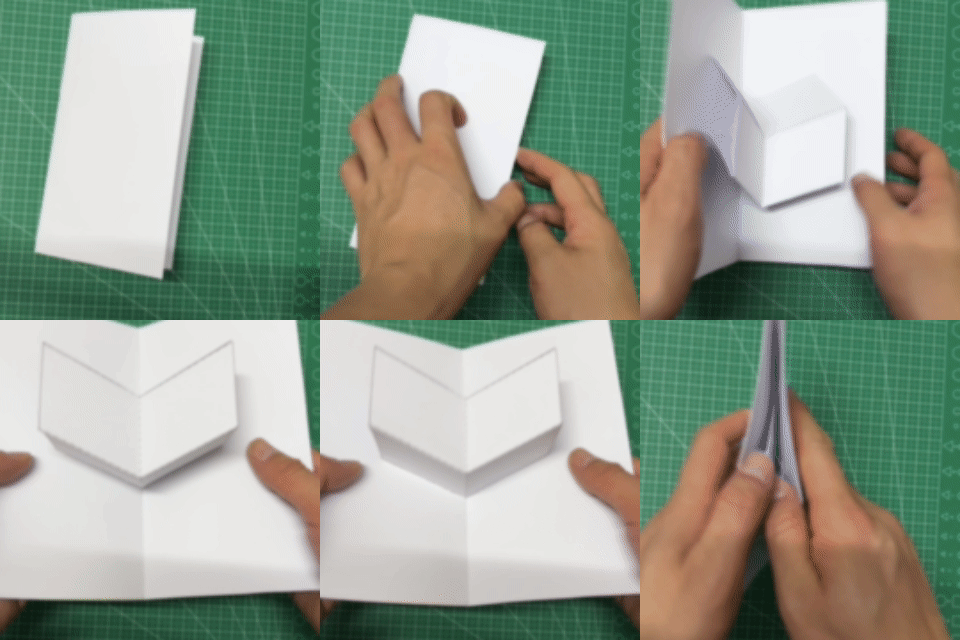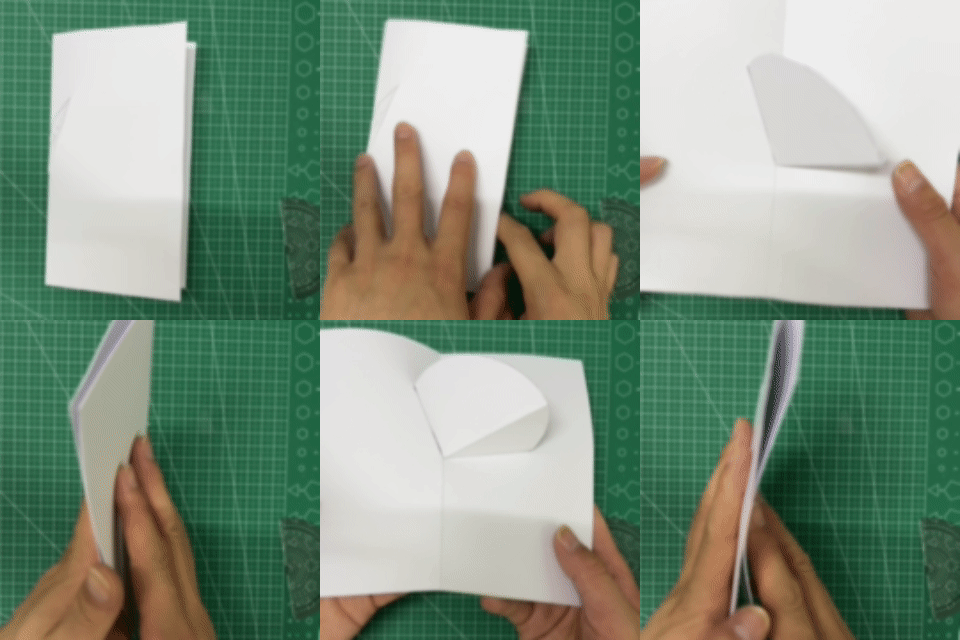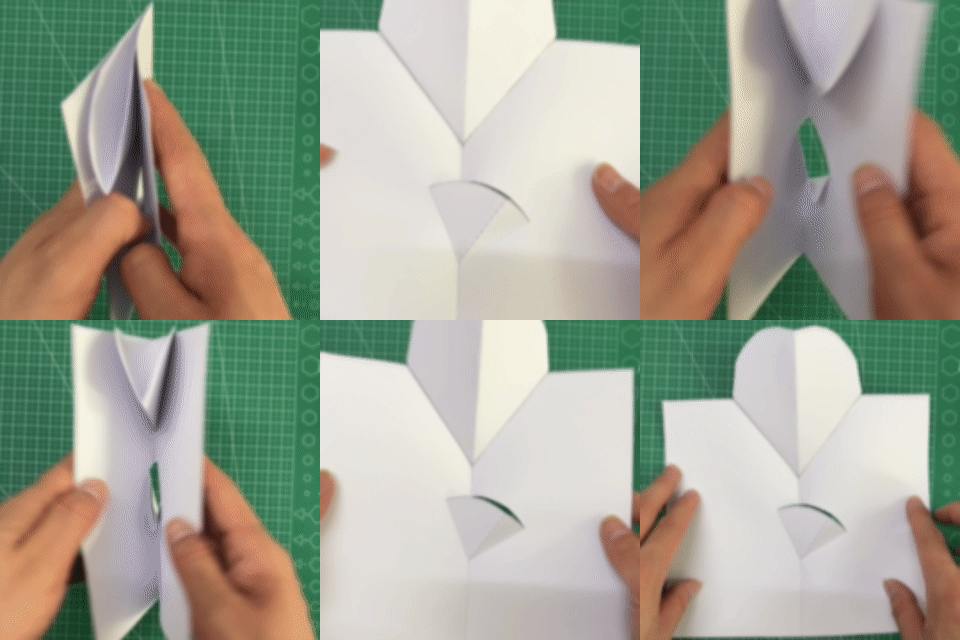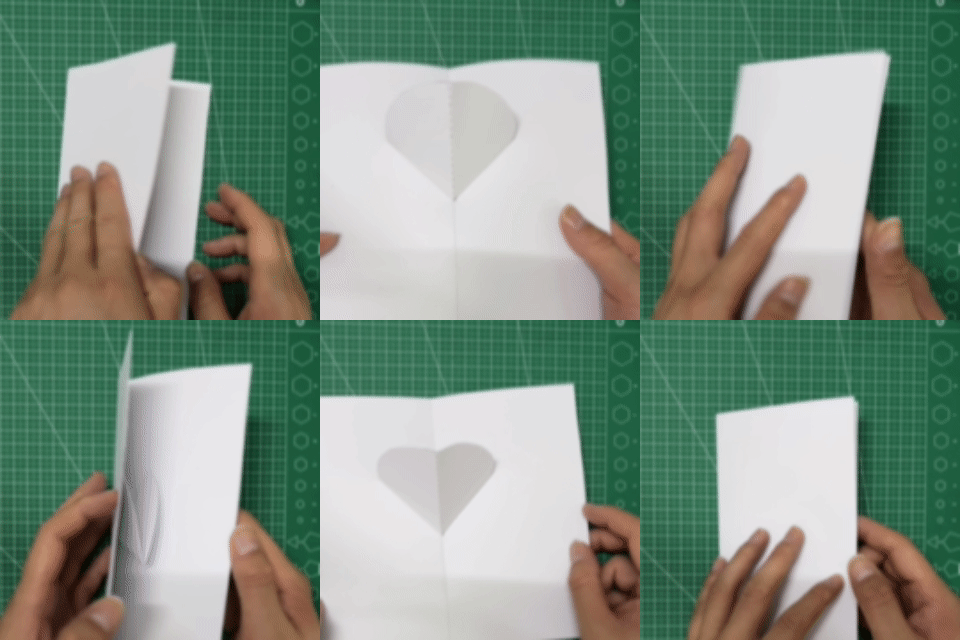
The 180° symmetric V-fold mechanism is one of the most classic and important foundational structures used in pop-up books and pop-up cards. Many complex spatial effects can be extended and combined from this single mechanism.
Its core strengths are symmetry, balanced force, and stable movement. When the page opens to 180°, the structure rises naturally into a clear three-dimensional form. When the page closes, it can flatten completely again, which makes it especially suitable for figures, buildings, animals, and other central pop-up subjects.
For beginners, the symmetric V-fold is easy to understand and ideal for basic practice. For more advanced design work, it often becomes the structural backbone behind more complex mechanisms.
Mechanism Category
Primary Category: 180° Mechanism
Core Mechanism: V-Fold Structure / Symmetric Structure / Basic Support Structure
Structural Traits: Left-Right Symmetry / Balanced Force / Stable Opening and Closing
Typical Uses: Character Forms / Architectural Structures / Animal Forms / Foundational Mechanism Practice
Let's fold it together. Here are the step-by-step instructions:
Step-by-Step Guide
Step 1: Prepare the materials and tools
Before you begin, prepare the basic materials and tools:
- Cardstock, ideally 200-300g, such as Dutch white card
- Scissors or a craft knife
- A ruler, preferably a metal ruler
- A pencil for light guide lines
- A scoring tool, or an empty pen if you do not have one
A slightly thicker paper is recommended because it gives the structure better support and makes it less likely to collapse. Once these basics are ready, the drawing, cutting, and folding stages become much easier to control.
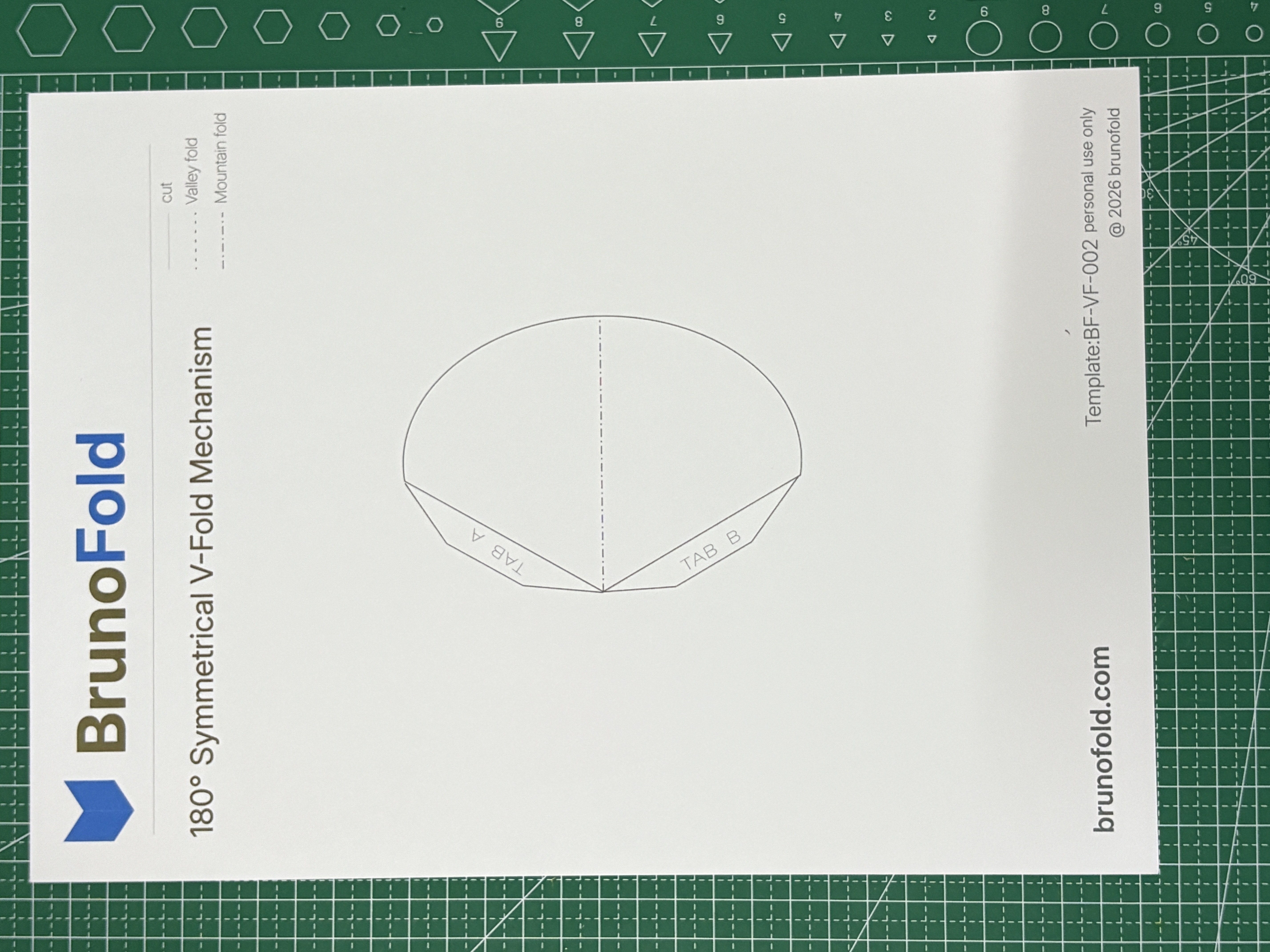
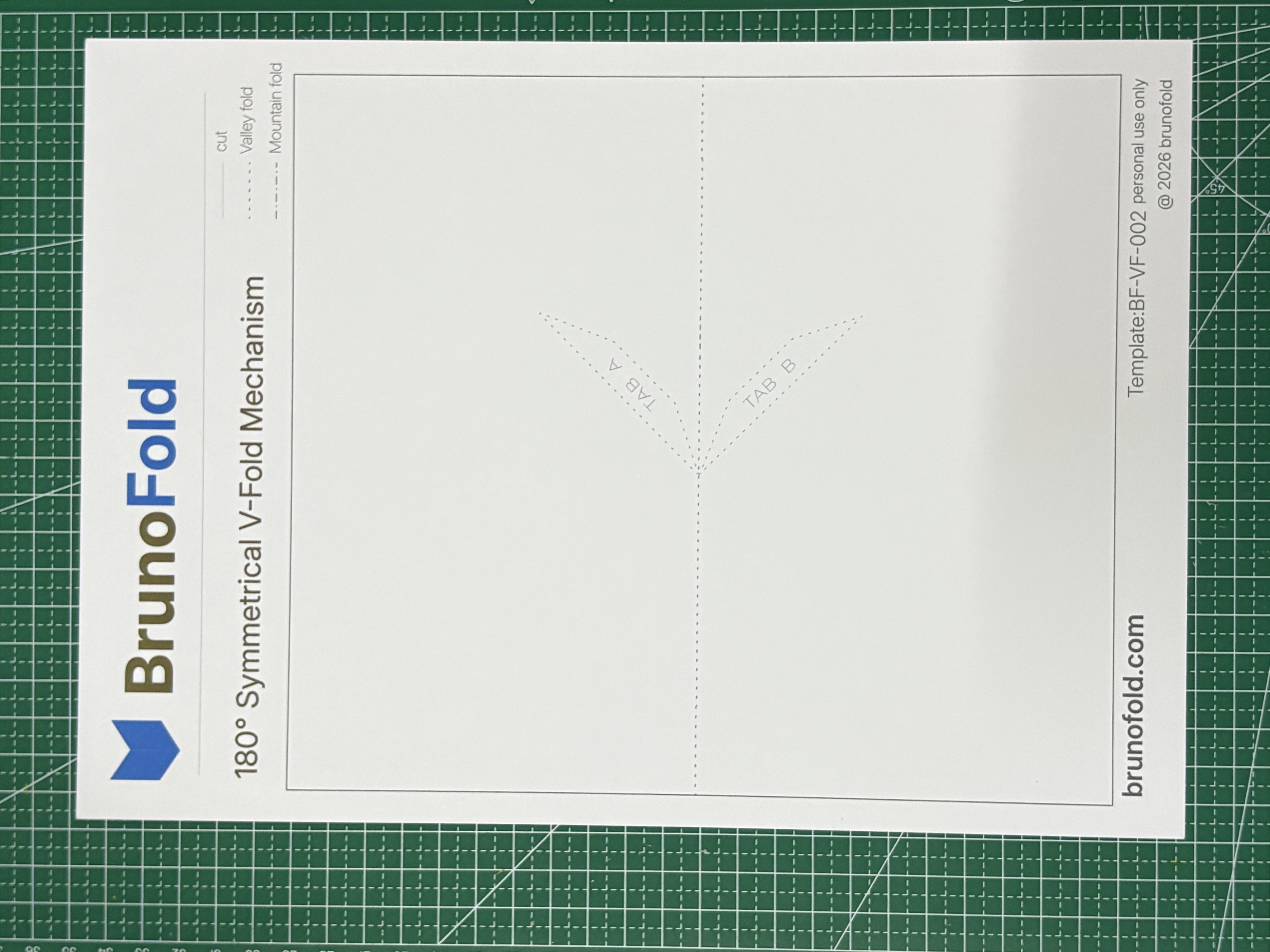
Step 2: Draw the base symmetric V-fold structure
This is the most important stage in the whole mechanism.
Start by drawing a center line, which acts as the book fold. Then draw two matching diagonal lines on both sides of that center line to form a clear V shape. The top point of the V must sit exactly on the center fold, and both sides should use the same angle. A 45° or 60° angle is usually a stable choice.
These two lines are the actual motion tracks of the structure. If they stay fully symmetrical, the mechanism will rise smoothly when opened. If they drift out of alignment, the structure can twist, lean, or catch during movement.
Step 3: Cut, score, and fold the structure
Cut along the two edges of the V shape, then score the center line and the V-fold lines. This scoring stage is critical because it determines whether the structure will move smoothly.
After scoring, begin folding. Fold the center line inward like a book fold. Then fold the V structure inward as well so the mountain and valley folds work together to create the pop-up form. Once assembled, open the page slowly to 180° and check whether the structure rises naturally. Close it again and make sure it can flatten fully without catching.
A successful result should show three things: both sides move in sync, the structure does not twist or bulge, and the opening and closing motion stays smooth.
Steps 2 and 3 currently reuse the Chinese visuals because separate English versions were not provided.
Next Article
180 Degree Asymmetrical V-Fold Mechanism Guide | Structure and Applications