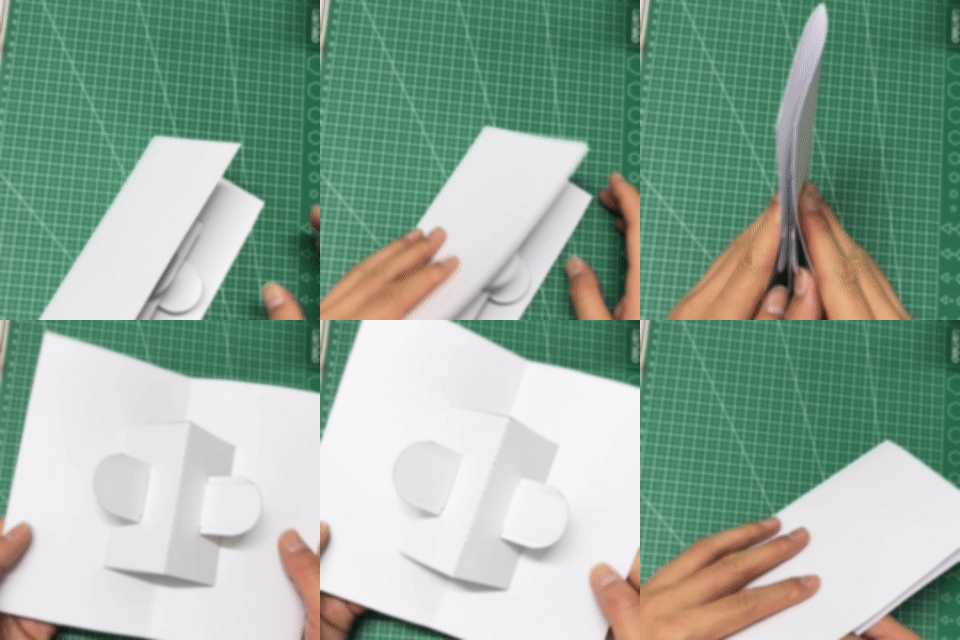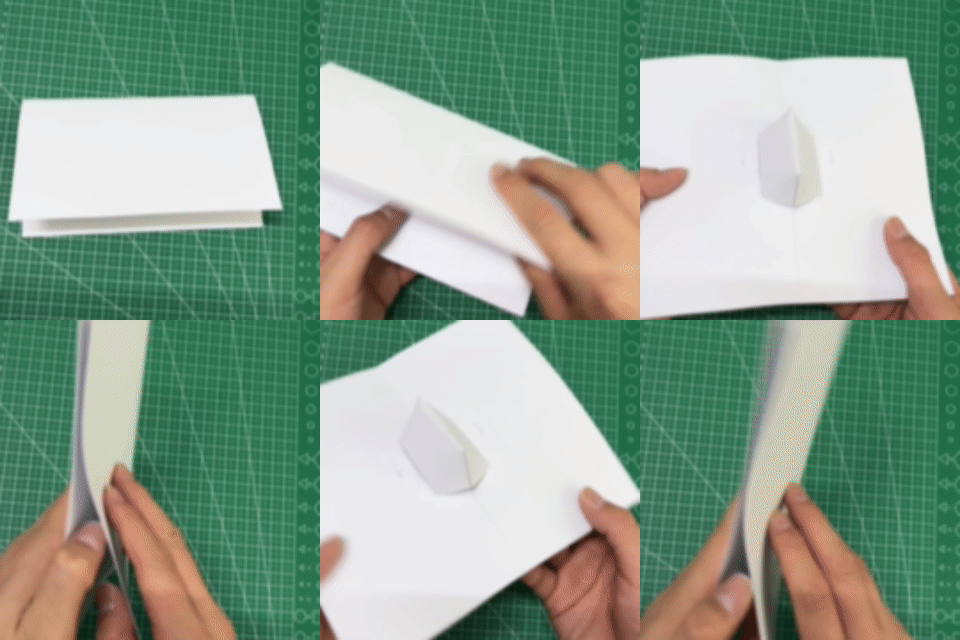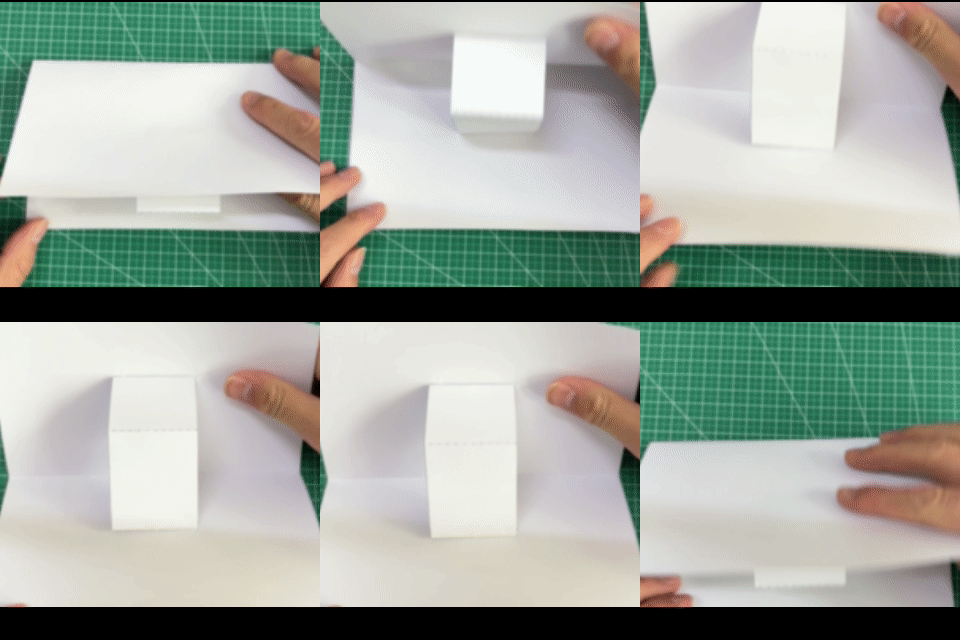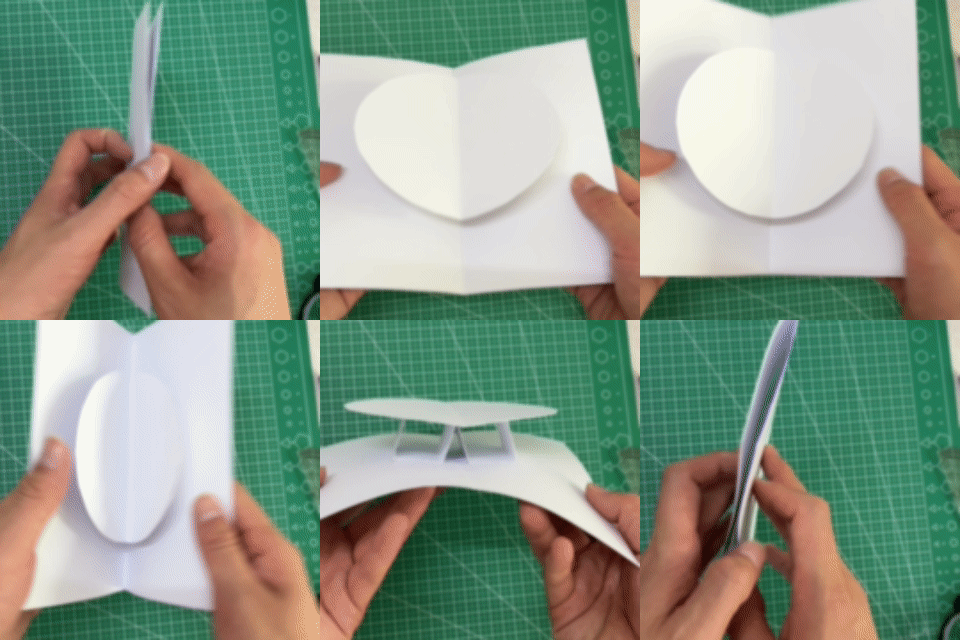
The 180 degree tent-supported stable platform mechanism is a classic paper-engineering structure built on the basic tent mechanism. By refining the support angle and load distribution, it can stay stable even when the page opens fully to 180 degrees. This mechanism is widely used for supporting pop-up book pages, displaying large visual panels, and carrying decorative elements.
Compared with a standard tent structure, this stable support version places more emphasis on building a load-bearing triangle. That triangle helps the page avoid collapsing or losing support when it is fully open. The result is both more visually effective and more practical, making it especially useful as a base support for scene-based pop-up books such as forests, buildings, stages, and other layered environments.
In practical design, the tent-supported stable structure can be used on its own, or combined with parallel folds and V-folds to create more complex spatial layers. It is one of the core foundation modules in pop-up book design.
Mechanism Category
Primary category: 180 Degree Structure
Core mechanism: Tent Mechanism
Structural role: Support Structure / Stable Structure
Application: Planar Support Mechanism / Base Support for Scene-Based Pop-Up Books
Let's fold it together. Here are the step-by-step instructions:
Step Guide
Step 1: Draw the structure and define the reference lines
First, build the basic geometric relationship of the tent structure.
- On both sides of the page centerline, or spine line, mark the symmetrical reference lines. The whole structure must stay symmetrical around the centerline, otherwise it will open unevenly.
- Draw the two diagonal support edges of the tent structure to form a "∧" shape, which is the core of the tent mechanism.
- Mark the fold types: the center is a mountain fold, and the two side folds are valley folds.
Key points:
- The top vertex should sit on the centerline
- Both side edges should be the same length
- A recommended angle range is 30°–60°
The real goal of this step is to define the structural logic first, not to draw the final outer shape.
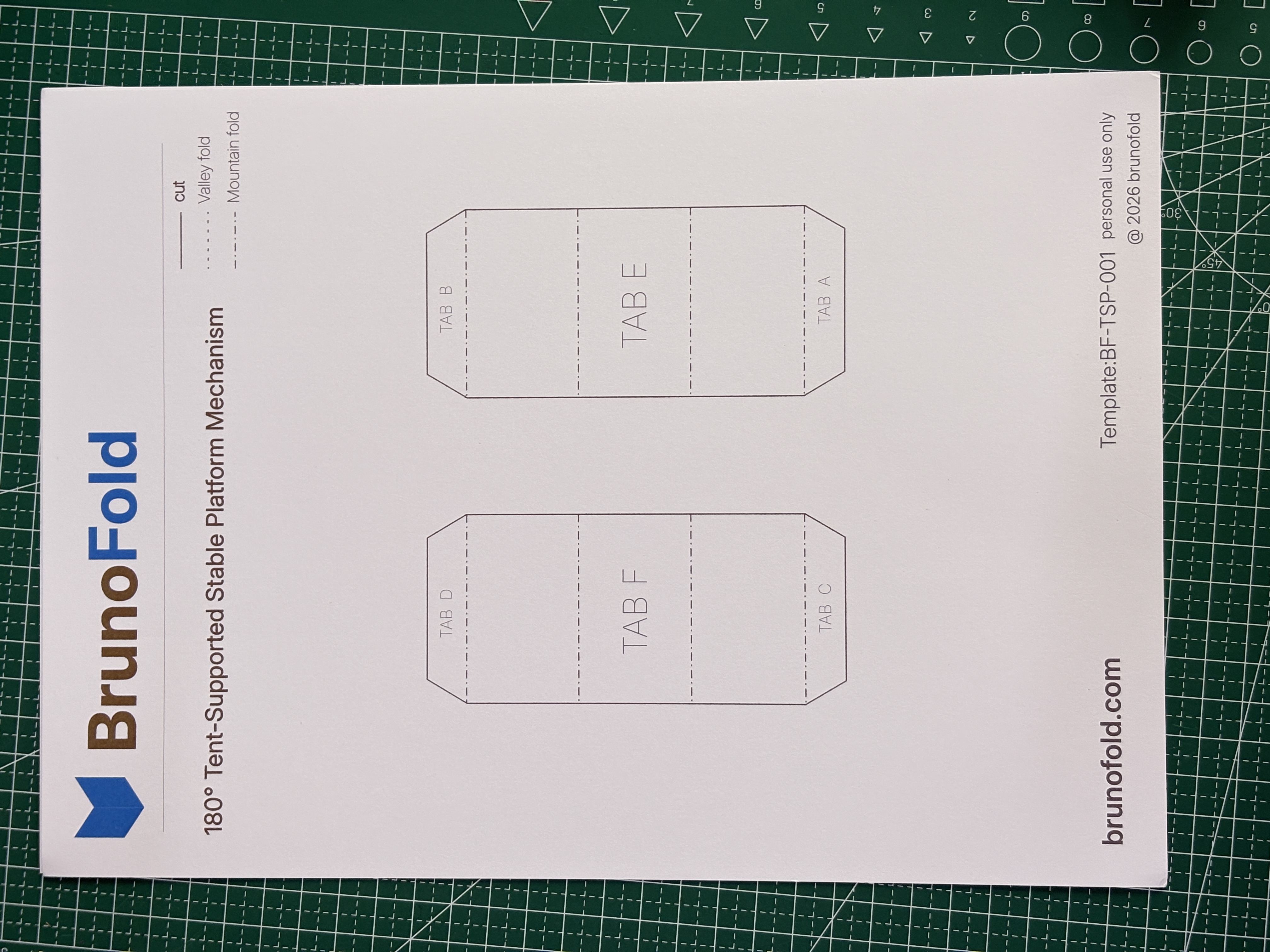
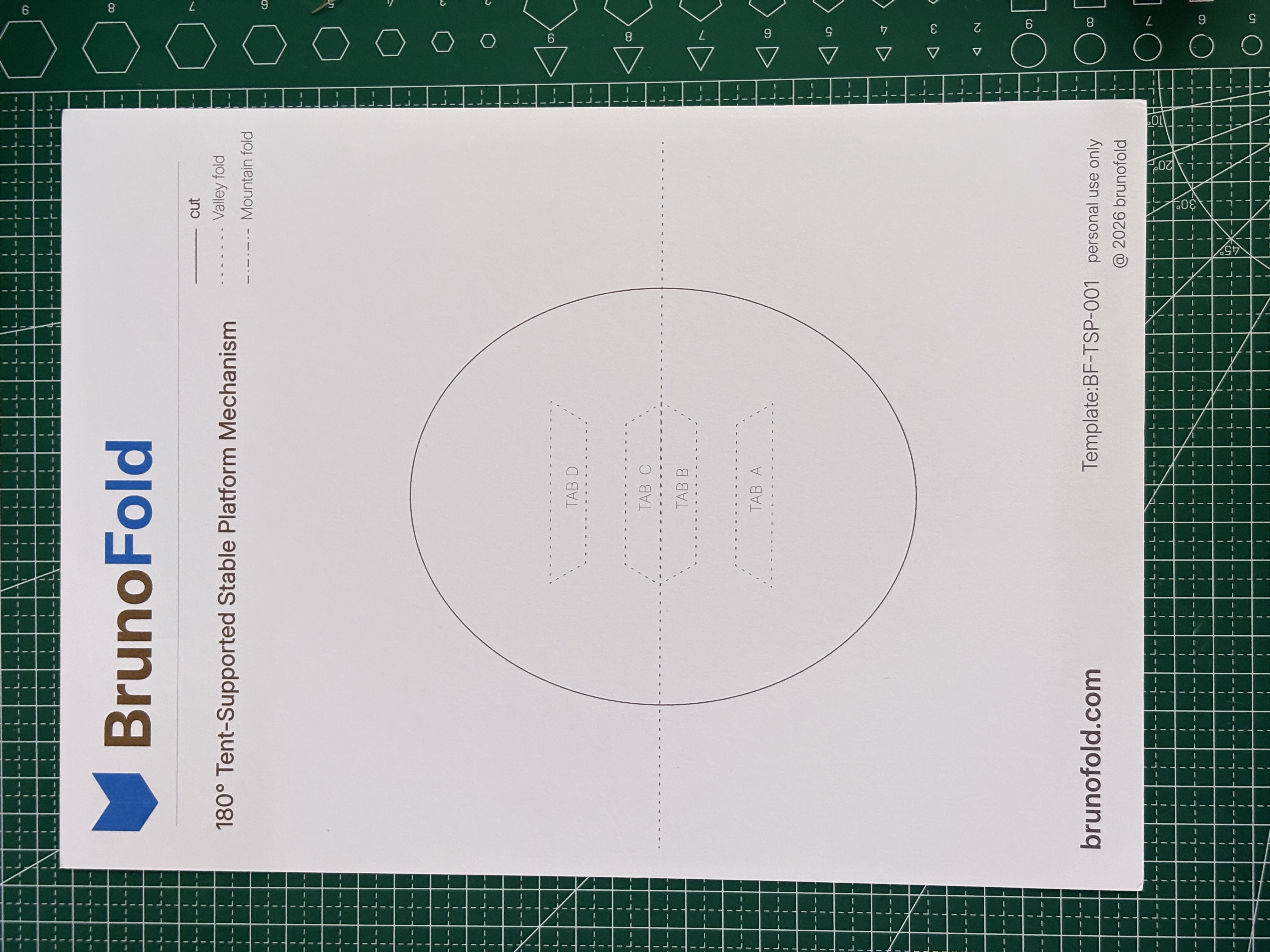
Step 2: Cut and fold the structure
Next, let the structure move from a flat sheet into a three-dimensional form.
- Cut along the outer contour of the structure. Do not cut through the root area that connects to the page, because that connection is essential for bearing load.
- Score the fold lines before folding. Use the back of a craft knife or a scoring tool so the fold lines stay clean.
- Fold in sequence: fold the centerline first as a mountain fold, then fold the two side lines as valley folds.
Important points:
- The fold lines must be crisp, or the structure will feel weak
- Heavy paper, such as 250g cardstock, should always be scored before folding
At this point, you will see a raised tent-shaped structure. It has already formed a triangular load-bearing system, which is the source of its stability.
Step 3: Open, tune, and improve stability
This is the essential difference between a standard tent mechanism and a stable tent-supported version.
- Open the page to 180 degrees and check whether the structure can stand up naturally.
- Fine-tune the angle of the two diagonal support edges. This is the most important variable for stability.
- If the mechanism will be used in a complex scene, such as a forest or building layout, add extra reinforcement.
If problems appear:
- Collapse usually means the angle is too small or the support edge is too short
- Failure to rise usually means the fold lines are not crisp enough or the paper is too soft
Angle adjustment guide:
- A larger angle creates a higher support, but reduces stability
- A smaller angle improves stability, but lowers the structure
- Around 45° is usually the best balance between stability and visual height
Advanced stability options:
- Increase the bottom connection width for better load support
- Use a double-layer structure for reinforcement
- Combine multiple tent units into a support array
Note: Steps 2 and 3 currently reuse the Chinese visuals because separate English images were not provided.
Next Article
180 Degree Spiral Line Mechanism: Dynamic Expansion Structure Guide