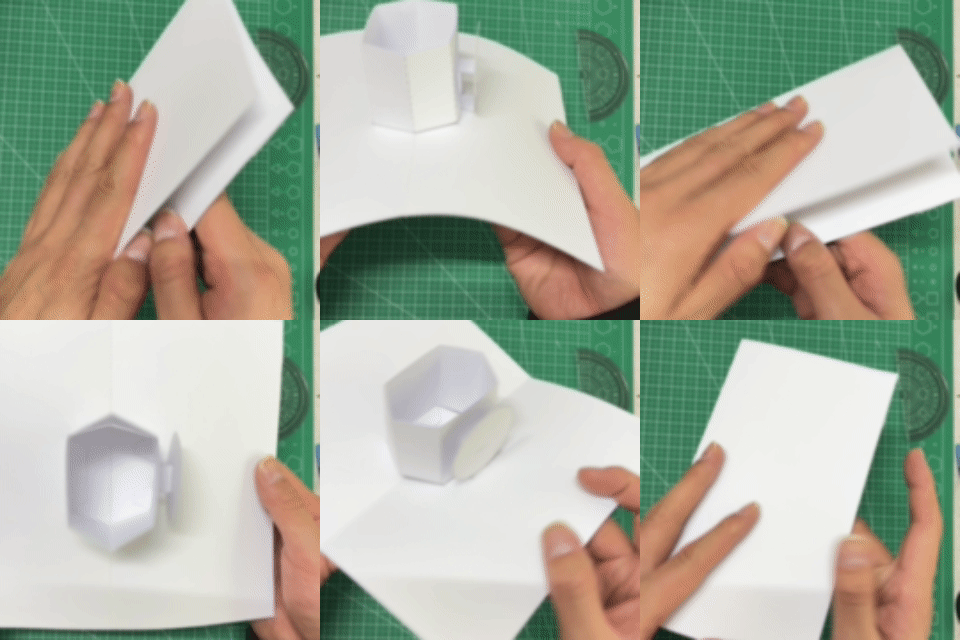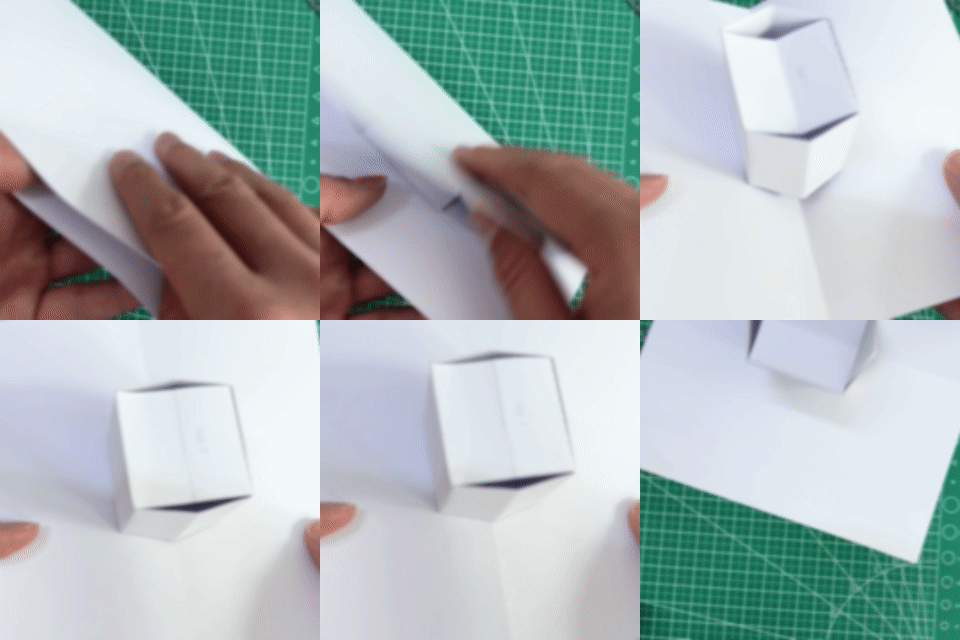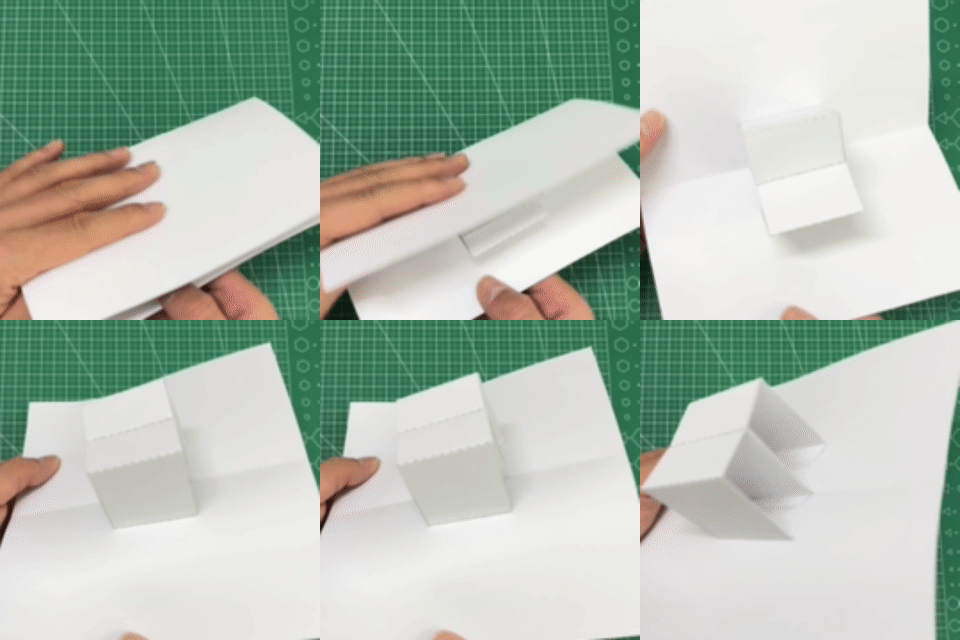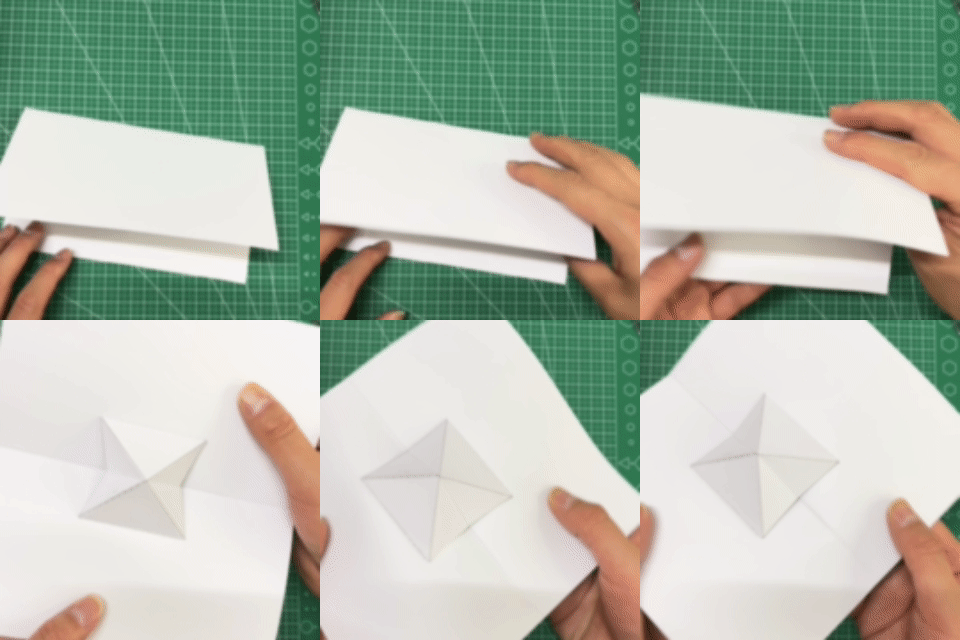
Overview
The 180 degree parallel pyramid mechanism is a three-dimensional paper-engineering structure built from a parallel fold principle. When the spread opens fully to 180 degrees, the pyramid rises from the flat page and holds a stable geometric shape. When the spread closes, the whole structure compresses flat again without blocking the page.
Through a symmetrical or parallel crease arrangement, several triangular faces move together and create a pyramid with clear spatial depth. Compared with a traditional single-point support structure, it offers better stability and a cleaner construction logic, which makes it useful for pop-up books, paper display pieces, and creative packaging projects.
Mechanism Category
Primary Category: Parallel Fold Mechanism
Structure Type: Pyramid Structure
Opening Angle: 180 Degree Structure
Visual Character: Multi-triangle coordinated pop-up form
Let's fold it together. Here are the step-by-step instructions.
Step-by-Step Guide
Step 1: Prepare the materials and tools
Before making the 180 degree parallel pyramid mechanism, prepare the core materials and tools first. This structure depends on several parallel fold lines and coordinated triangular faces, so paper stiffness and cutting accuracy directly affect the final three-dimensional effect and overall stability.
Materials and tools:
- 250g Dutch cardstock, recommended
- Scissors or a craft knife used with a ruler
- Glue or double-sided tape
- Cutting mat
- Empty ballpoint pen or another scoring tool
Cardstock around 250g gives the pyramid enough support to stay stable when the spread opens fully to 180 degrees. It is much less likely to collapse or deform. If you use thinner paper, the triangular faces can lose support and weaken the final visual result.
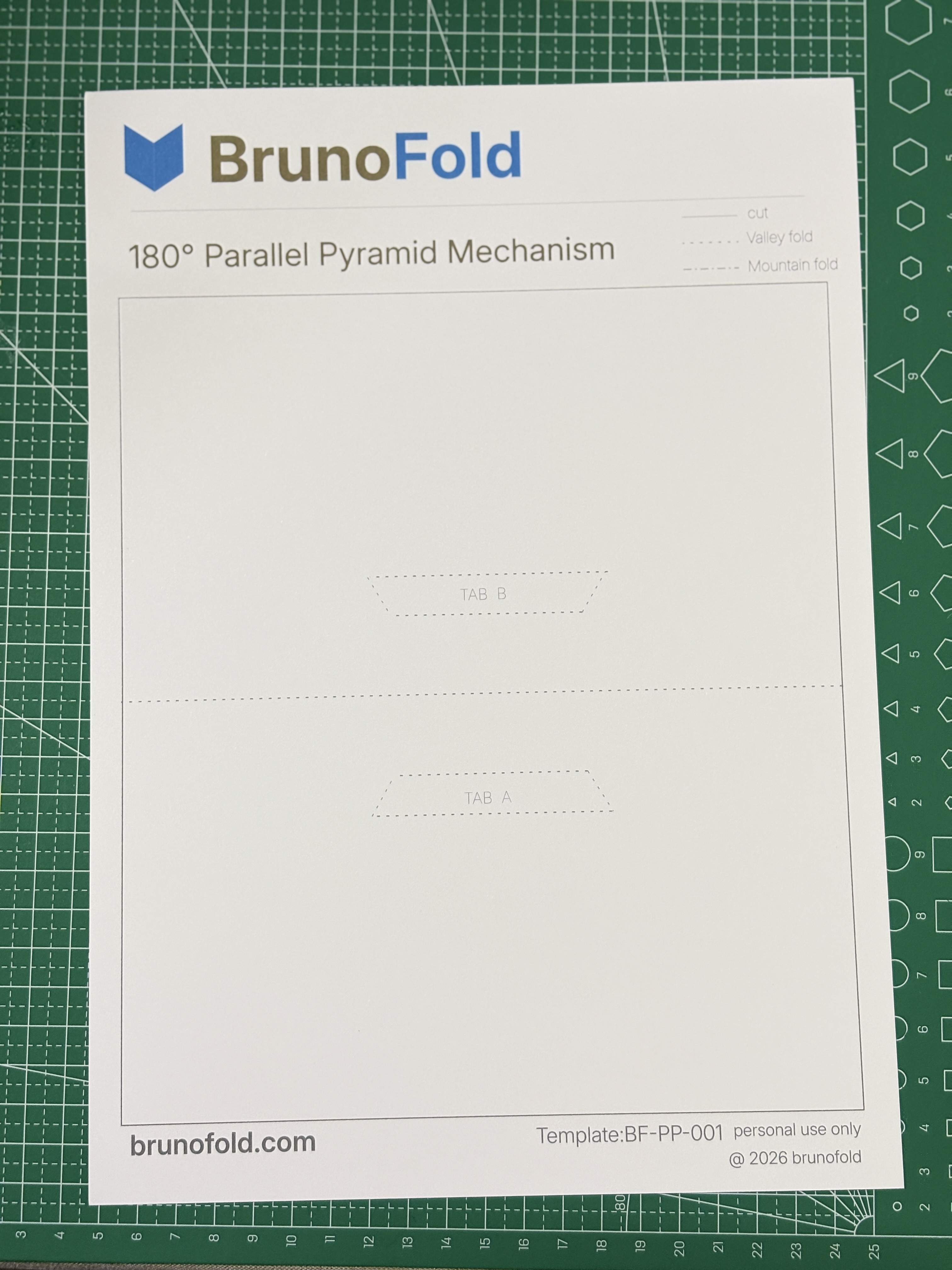
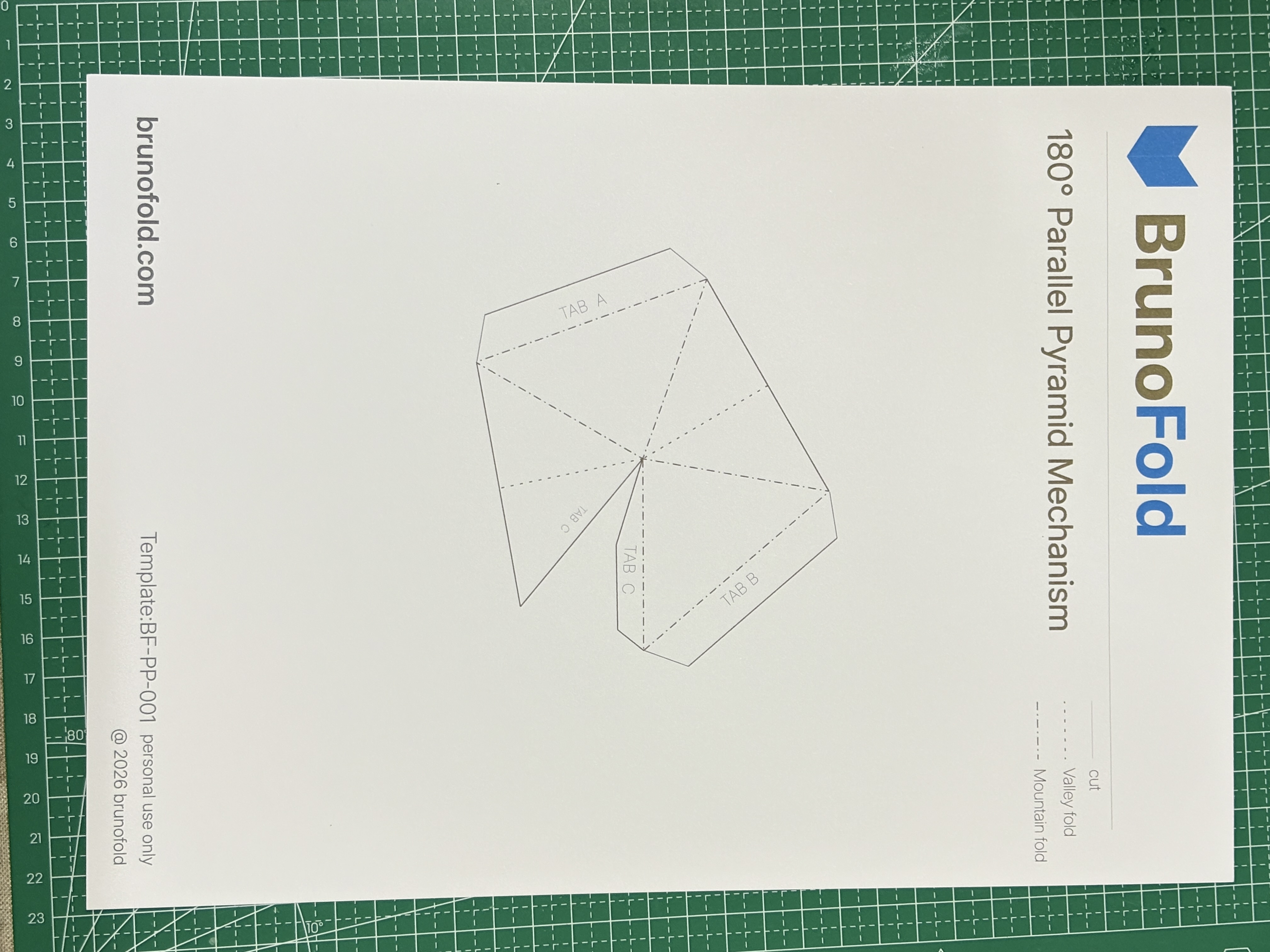
Step 2: Cut the template and score the fold lines
After printing the template, start by cutting along the solid lines. A ruler with a craft knife is the best option when you want clean edges and accurate angles. Once the cutting is finished, you will have a flat structure made from several triangular faces and connecting fold lines.
The next stage is critical: scoring.
Why is scoring necessary?
Because the pyramid mechanism contains several parallel fold lines, folding it directly can create crooked creases, structural drift, or wrinkles in the paper. Scoring each fold in advance makes the folding path much more precise and helps the structure rise correctly when the spread opens.
How to score:
- Find the dashed fold lines in the template
- Align a ruler with each dashed line
- Use an empty ballpoint pen or a scoring tool to press lightly along the line
- Apply enough pressure to create a clear crease without tearing the paper
This step directly determines whether the pyramid can form smoothly, so it is one of the most important foundations in the whole build process.
Step 3: Fold the structure and form the pyramid
After scoring, start folding along the crease directions. In most cases:
- Folds that go inward are valley folds
- Folds that go outward are mountain folds
Pre-fold all the crease lines first so the structure becomes a basic movable framework. Then glue the matching connection faces, usually the bottom or side tabs, with glue or double-sided tape.
Once all the connections are fixed, open the card slowly to 180 degrees:
- Several triangular faces will rise together through the linked action of the parallel fold lines
- The final result becomes a stable three-dimensional pyramid
If the structure does not stand up smoothly, check these points:
- Whether the scored lines are clear and folded in the correct direction
- Whether the glued areas are aligned accurately
- Whether any triangular faces interfere with one another or slip out of place
When the assembly is complete, you will have a classic paper-engineering structure that rises into a pyramid when opened and collapses flat when closed. This kind of mechanism works especially well as a visual focal point in a pop-up spread or as the central element on a page.
Note: Step 2 and Step 3 currently reuse the Chinese visuals because separate English versions were not provided.
Next Article
180 Degree Cylinder Mechanism Guide: From Flat Sheet to Three-Dimensional Cylinder