The 180° sound pop-up mechanism is an interactive paper structure that adds audible feedback to a moving card. With only paper, fold lines, and a simple friction setup, the mechanism can create a repeated clicking sound during opening and closing, giving the design a stronger sense of interaction than a standard silent pop-up.
Its core idea is straightforward: a toothed strip provides the rhythm, and a scraper glides across that surface to create sound. Once the spacing, pressure, and contact angle are tuned well, a flat paper card becomes a tactile and audible paper-engineering experiment that works especially well for teaching, prototyping, and DIY templates.
In this guide, you will move from template preparation to cutting, scoring, assembly, and sound tuning, while also understanding why this structure can produce sound as the card moves.
Mechanism Category
Primary Category: Popup Card
Core Mechanism: Sound Mechanism
Design Domain: Paper Engineering
Content Format: Folding Diagram Tutorial
Let's fold it together. Here are the step-by-step instructions:
Step-by-Step Guide
Step 1: Download the template and prepare the materials
Before you begin, prepare the basic materials and keep the tool set simple so the mechanism is easy to reproduce.
Materials:
- 200-250g cardstock, recommended for a crisper sound
- Scissors or a craft knife
- A cutting mat, optional
- A scoring tool, or an empty ballpoint pen as a substitute
- Glue or double-sided tape
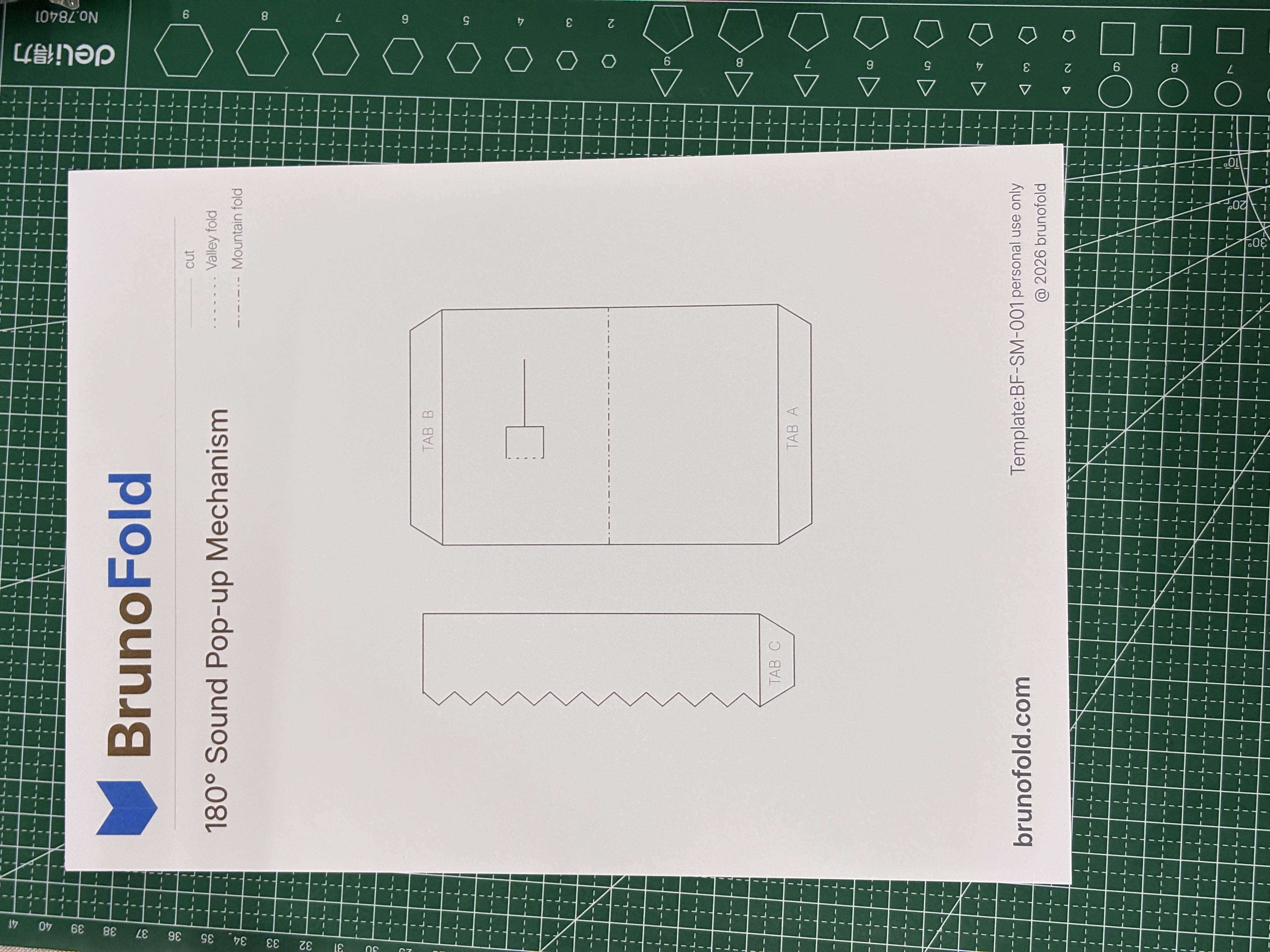
This structure includes two core parts:
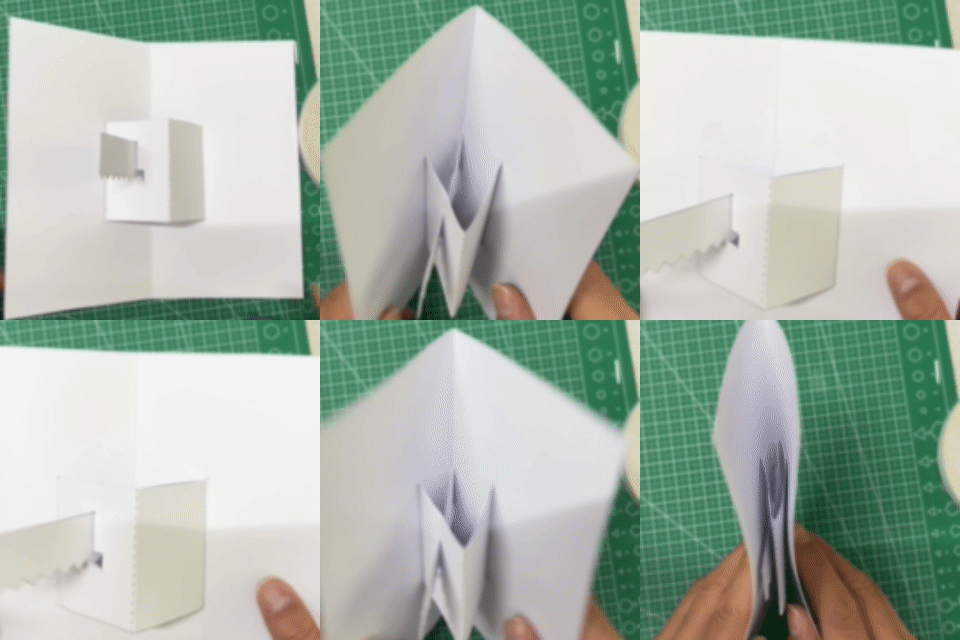
- A toothed strip that acts as the sound source
- A scraper strip that creates friction against the teeth
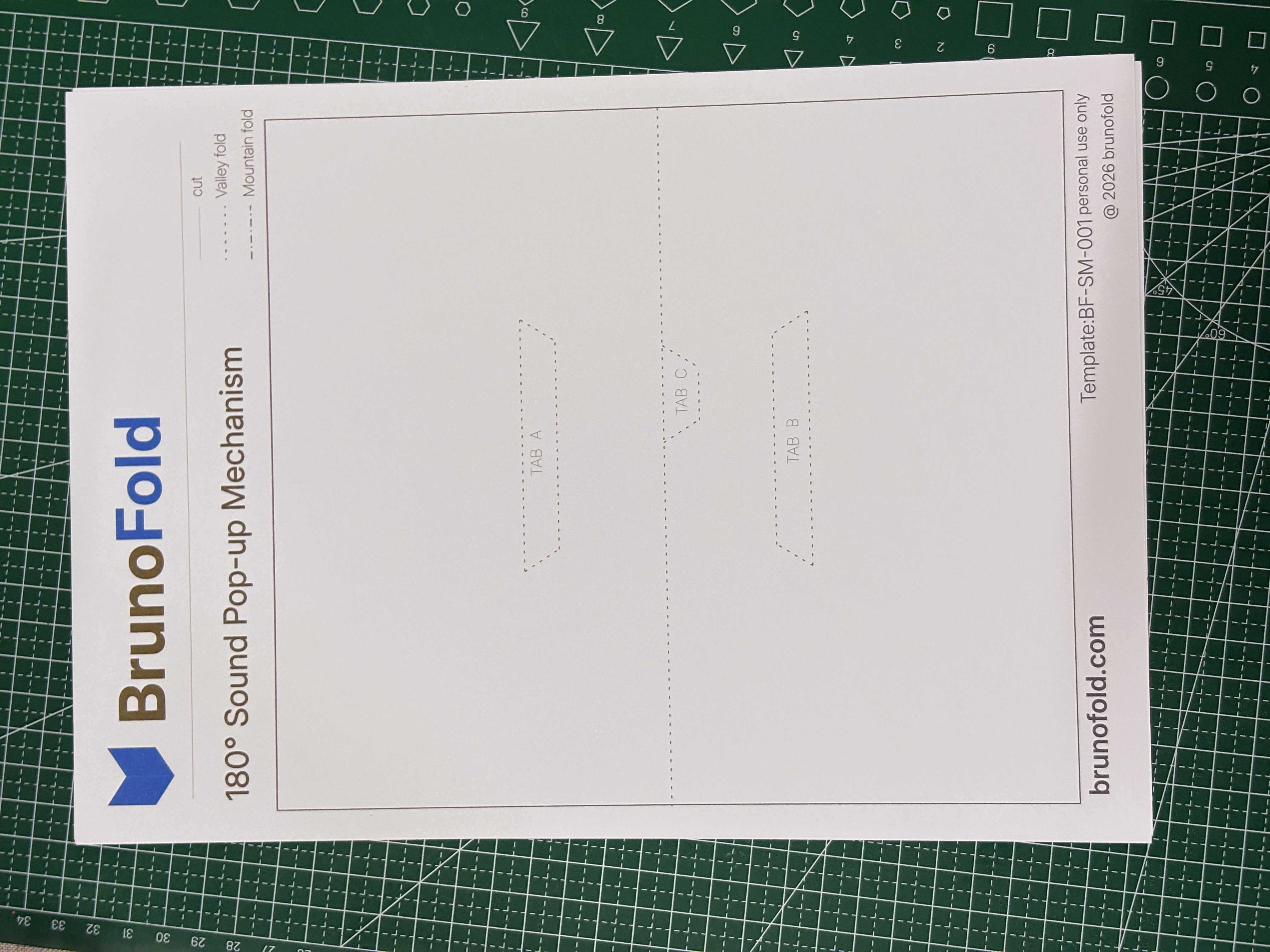
It is best to download and print the template first. The cut lines and fold lines are already marked, so taking a moment to understand the relationship between the toothed strip and the scraper will make the assembly stage much easier.
Step 2: Cut and score the structure
This stage has a direct effect on the final sound quality, so it is worth working slowly and accurately.
Start with the toothed strip. Cut along the solid outline and keep the teeth as even and sharp as possible. The more consistent the teeth are, the more stable the friction rhythm becomes, and the clearer the sound will be.
Avoid these common mistakes:
- Do not round off the teeth, or the sound will become dull
- Do not vary the tooth spacing too much, or the clicks will become irregular
Next, make the scraper strip. Cut out the narrow paper strip from the template and keep its edge straight. A slight curve can add a little spring and help it produce sound more continuously, but it should still stay controlled and tidy.
Then score every dashed fold line before folding. This step determines the motion path of the mechanism. If the fold positions drift too much, the scraper can shift out of alignment and the sound test will become unreliable.
Step 3: Assemble the mechanism and tune the sound
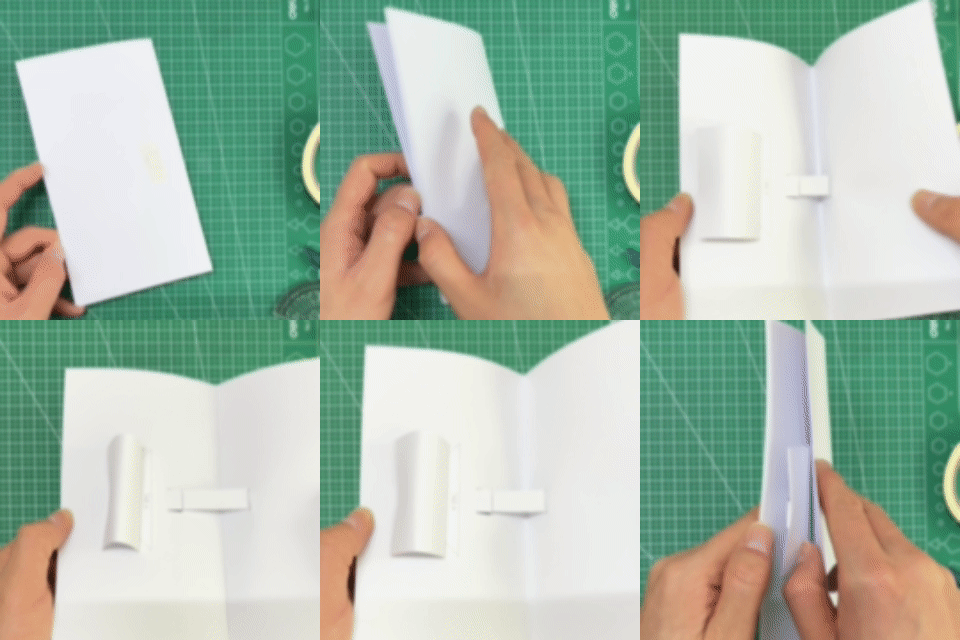
This is the most important part of the structure. First, attach the toothed strip to one side of the card, usually the base side, and make sure the teeth face the same direction as the scraper movement. Then fix the scraper strip in place with one end glued down while the other end presses lightly against the toothed surface. The goal is not to lock it flat, but to keep it in contact while still allowing it to slide.
The tuning stage determines whether the mechanism will actually make sound. Pay attention to three factors:
- Pressure: too loose and there is no sound, too tight and the motion jams
- Contact angle: a slight tilt usually works better than a perfectly vertical angle
- Contact position: the scraper should glide along the sloped face of each tooth instead of hitting the tooth tip directly
At the moment, this diagram set still does not produce a fully stable continuous clicking sound. The current assumption is that the paper stock is too soft. The Dutch cardstock used in this test bends too easily for a sound mechanism, so a harder paper will need to be tested in a later round.
Note: Steps 2 and 3 currently reuse the Chinese visuals because separate English versions were not provided.
Next Article
180 Degree Tent Mechanism with Extension Strip: A Wider and More Stable Opening Structure