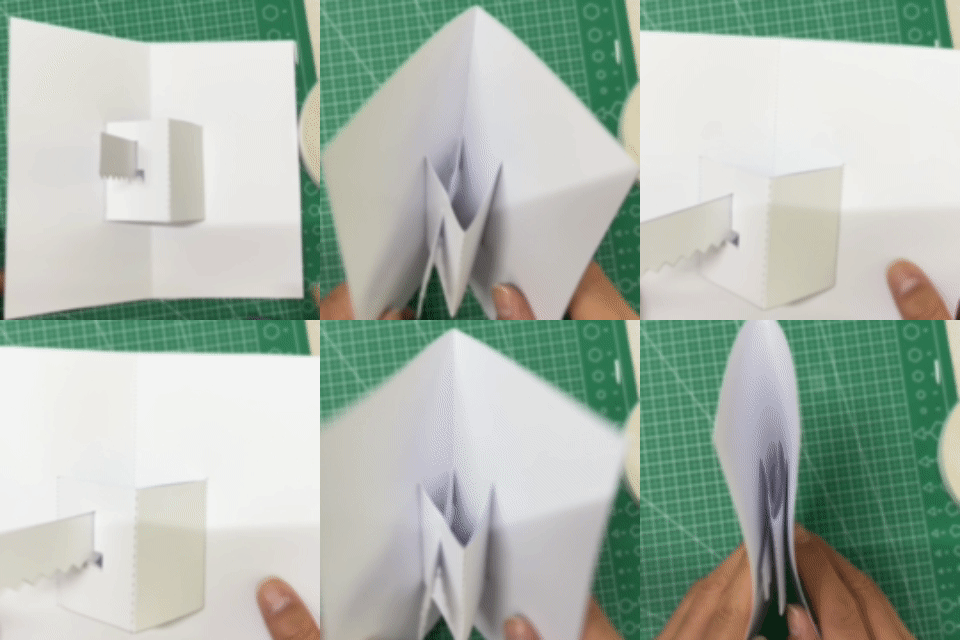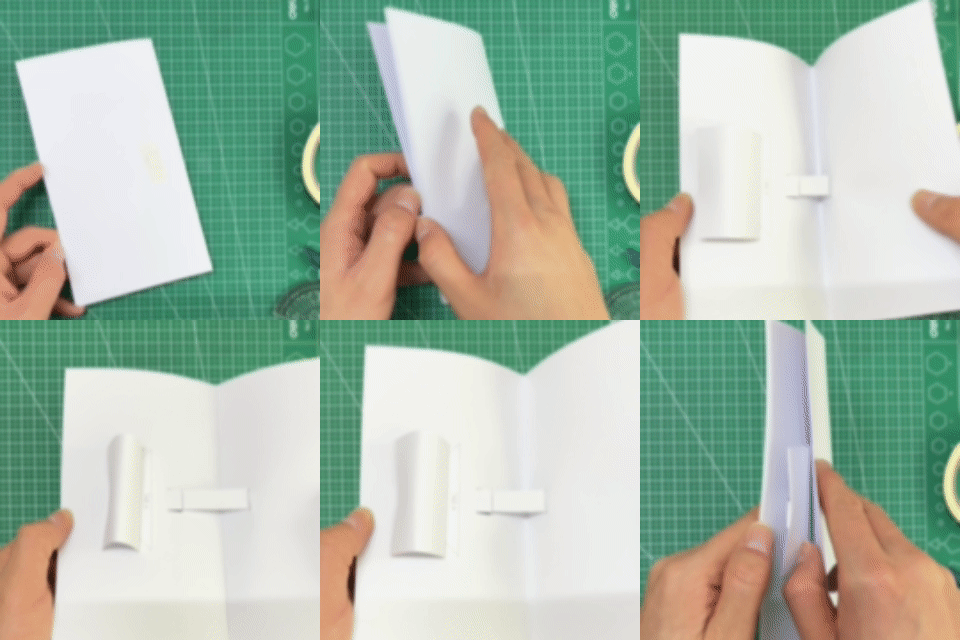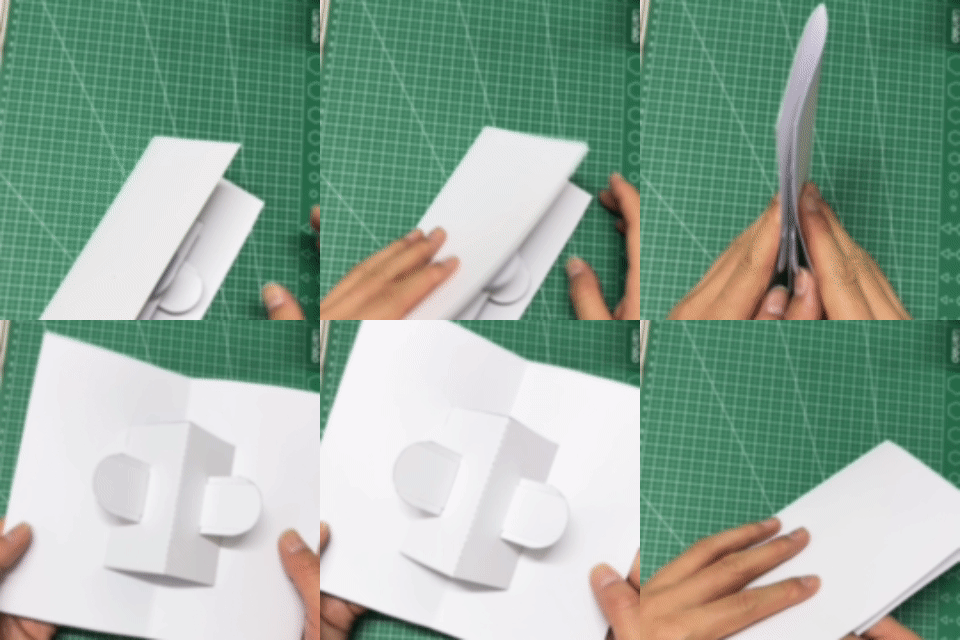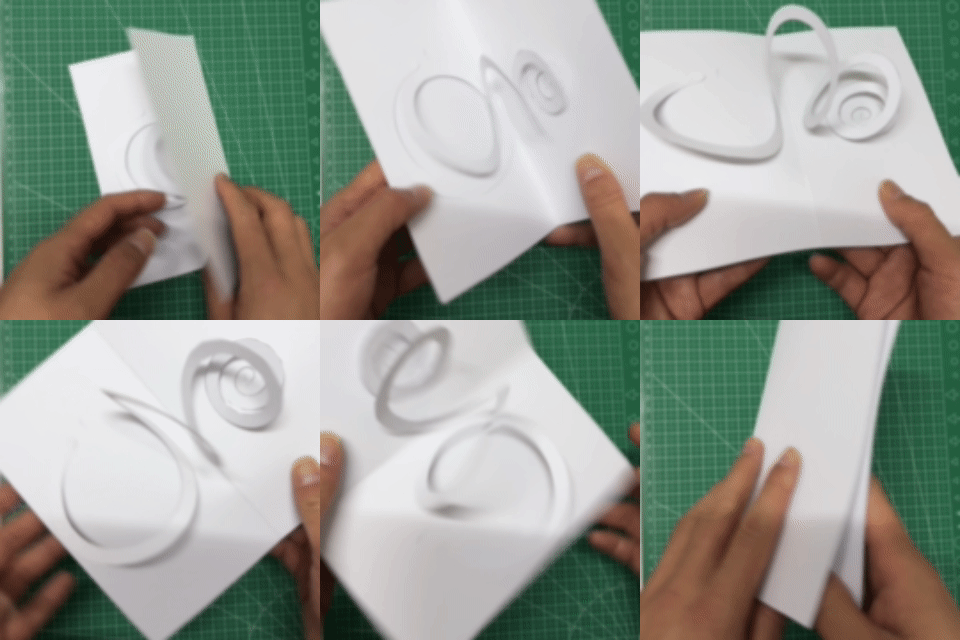
The 180° spiral mechanism is a pop-up paper structure based on rotation and gradual change. When the page opens from flat to 180°, the inner spiral form unfolds step by step, creating a visual effect that feels like rotation, rising motion, or extension. It gives the finished piece a strong sense of movement and spatial depth.
The key to this mechanism is the spiral path and the control of its connection points. By arranging multiple segments along a spiral trajectory and attaching them at specific positions, the structure creates a continuous transformation while the page opens. Compared with a standard V-fold or tent structure, the spiral mechanism places more emphasis on the motion process, making it useful for themes such as growth, rotation, and blooming.
In practical projects, the 180° spiral mechanism works well in pop-up cards, artist books, and interactive picture books. It can suggest a spiral staircase, growing vine, tornado, energy vortex, or other dynamic visual ideas, making it an advanced mechanism with both structural interest and expressive potential.
Mechanism Category
Primary Category: 180° Structure
Core Mechanism: Spiral Mechanism / Rotating Structure / Dynamic Opening Structure
Design Direction: Pop-Up Book Structure / Pop-Up Card Template
Content Format: Folding Diagram Tutorial
Let's fold it together. Here are the step-by-step instructions:
Step-by-Step Guide
Step 1: Print the diagram and prepare the tools
First, download and print the diagram template for the 180° spiral mechanism. Slightly thicker paper is recommended because it makes the finished model more stable and better suited for later folding and gluing. In addition to the printed sheet, prepare basic tools such as scissors or a craft knife, glue or double-sided tape, and a scoring tool.
If you want cleaner edges, use a cutting mat and ruler as well. Preparing everything in advance makes the cutting, folding, and assembly process smoother and reduces the chance of mistakes halfway through the build.
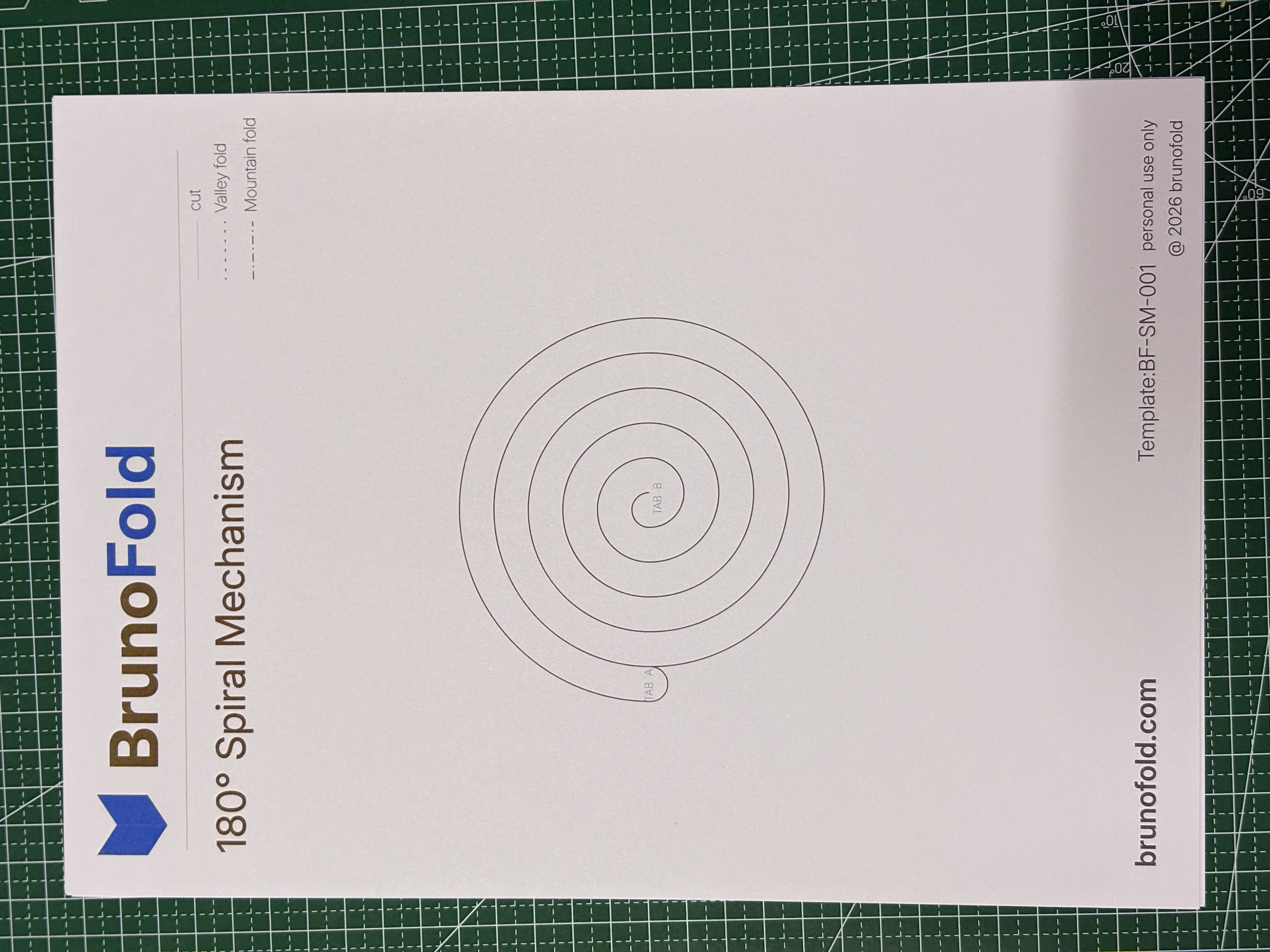
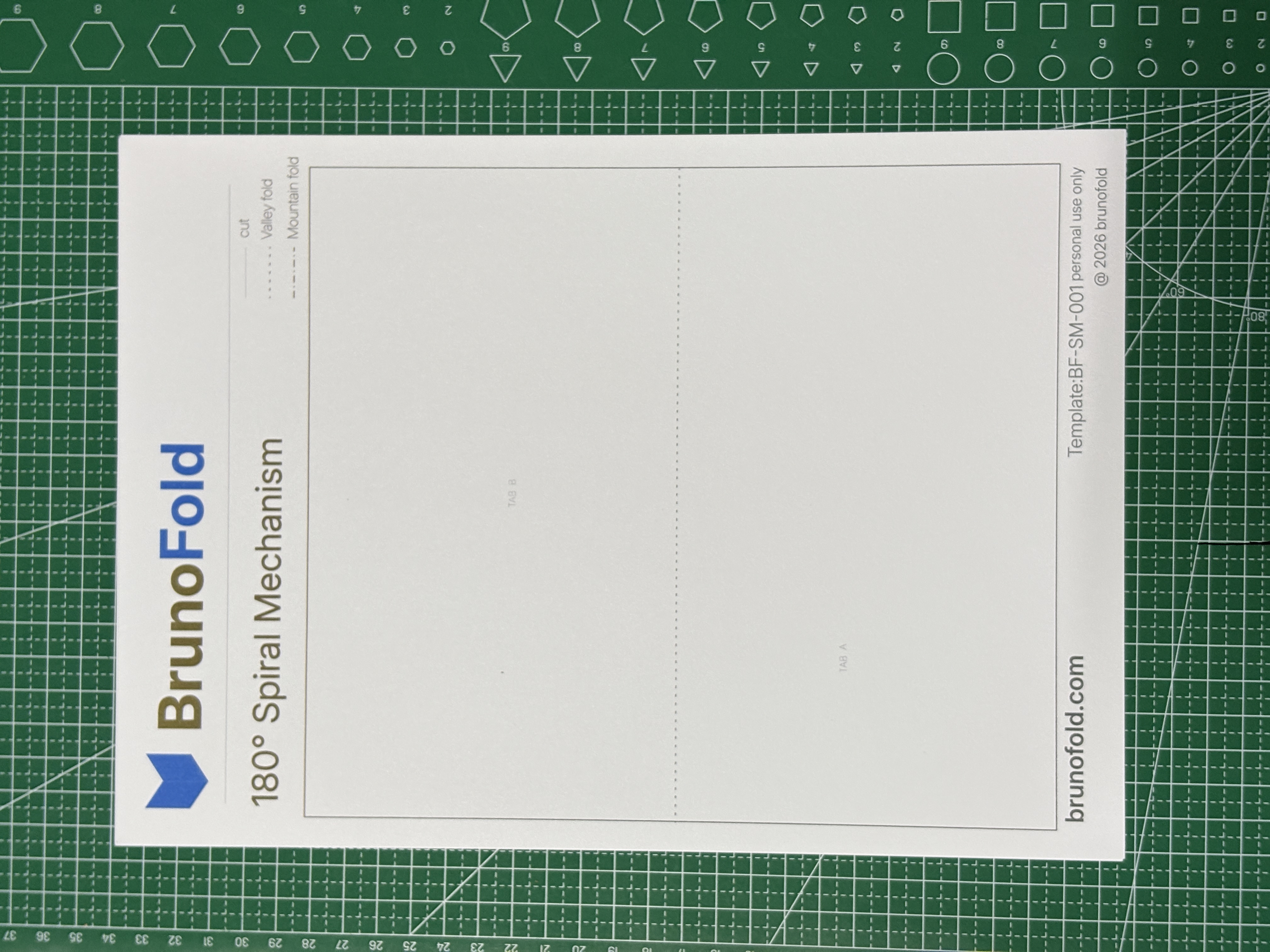
Step 2: Cut along the outline and score the fold lines
Look closely at the outline, fold lines, and glue areas on the diagram. Cut out the structure along the outer contour first, then score the marked fold lines. Scoring before folding helps the paper sit more cleanly and reduces skewing or surface damage.
Pay special attention to the inner connection areas of the spiral. Keep the cuts clean and the corners sharp. The fold direction should also match the markings on the diagram, so the mechanism can open with a smooth and natural spiral motion later.
Step 3: Glue the structure in place and test the opening motion
Attach the cut spiral structure to the corresponding positions on the cardstock or page according to the glue areas in the diagram. Do not press everything down permanently at once. It is better to position the parts lightly, close the page to test the motion, and only fix the structure fully after you confirm that it can fold in and open out naturally.
After assembly, slowly open the page to 180°. You should see the spiral mechanism unfold step by step, creating a clear sense of rotation and extension. If one area catches, tilts, or cannot close completely, check the fold direction and glue position, then make a small adjustment before the glue sets completely.
Note: Steps 2 and 3 currently reuse the Chinese visuals because separate English versions were not provided.
Next Article
90° Symmetric and Asymmetric V-Fold Mechanisms: A Structural Comparison Guide